



Fire Curtains
What Are Fire Curtains and Where Are They Used?
Fire curtains are automatic fire-resistant barriers designed to help contain fire and smoke within a building. They are usually concealed in the ceiling or structural opening and deploy only when triggered, typically in response to a fire alarm or similar emergency signal.
Their main purpose is to support compartmentation by creating a protective barrier where a permanent wall or fire door may not be practical. This makes them particularly useful in modern buildings that rely on open layouts but still need to meet fire safety requirements.

How Fire Curtains Work
In normal conditions, a fire curtain remains hidden from view. In the event of a fire, it descends into place to form a barrier that helps limit the spread of fire and smoke from one area to another.
Depending on the design and application, fire curtains may be used to:
- protect openings in walls or ceilings
- separate large open-plan areas
- support escape route protection
- contain smoke and heat within a defined zone
- provide additional protection in atriums, lobbies, and circulation spaces
Because they remain retracted until needed, fire curtains allow architects and building owners to maintain open spaces without relying solely on visible fixed barriers.
Why Fire Curtains Matter
One of the biggest challenges in modern building design is balancing openness with fire safety. Large openings, glazed areas, atriums, and connected circulation spaces can improve usability and aesthetics, but they can also create paths for fire and smoke to spread more quickly.
Fire curtains help address this challenge by providing a barrier only when required. This makes them a practical solution in buildings where traditional fire doors or shutters may interrupt the design, movement, or intended use of the space.
Where Fire Curtains Are Commonly Used
Fire curtains are used across a wide range of buildings, especially where open space and safety performance need to work together. Typical applications include:
- office buildings
- hotels and hospitality environments
- retail outlets and shopping centres
- atriums and reception areas
- educational facilities
- healthcare environments
- residential and mixed-use developments
- public and commercial buildings
They are especially relevant where the fire strategy requires separation but the layout does not allow for conventional passive fire barriers.
Fire Curtains and Compartmentation

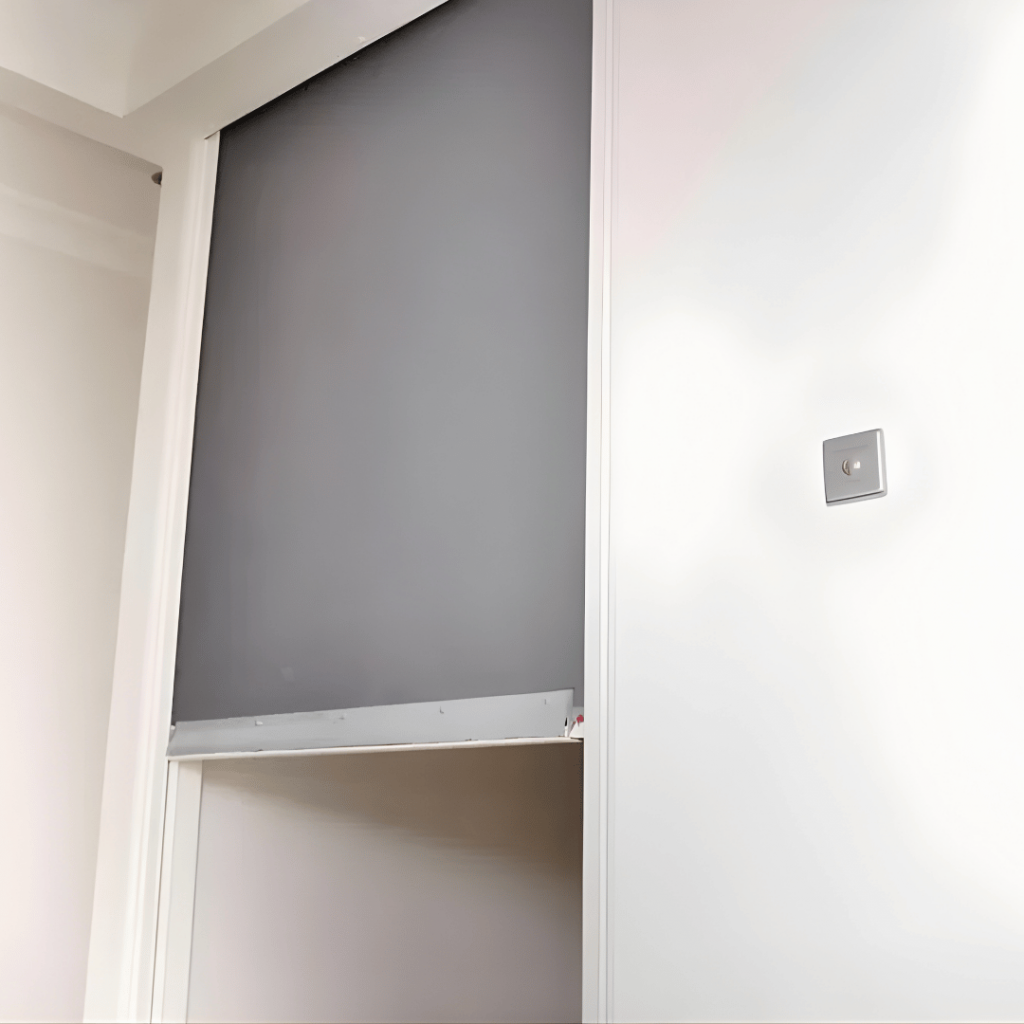
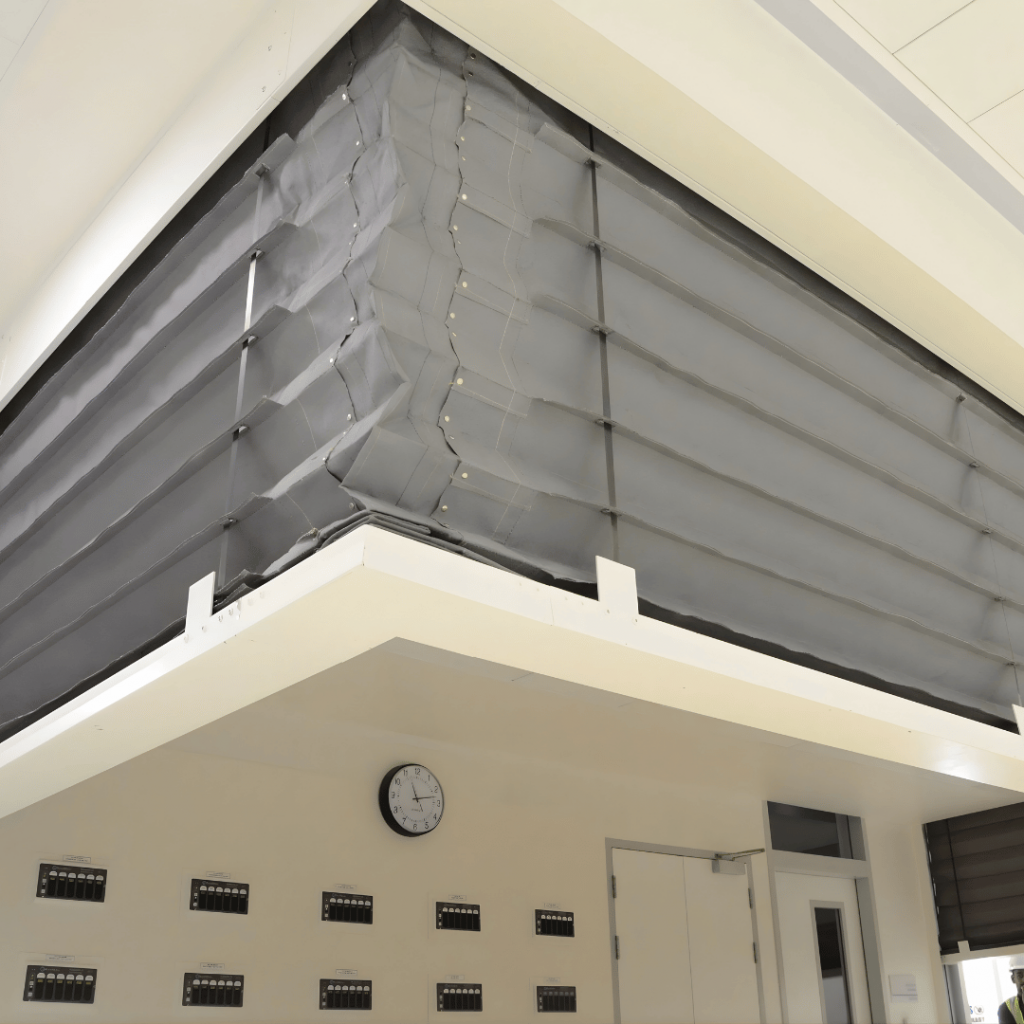
Compartmentation is a key principle in fire safety design. It involves dividing a building into sections to slow down the spread of fire and smoke, protect escape routes, and buy time for evacuation and emergency response.
Fire curtains can support this strategy by closing off vulnerable openings when needed. In this way, they contribute to the wider passive fire protection approach of the building, even though they are often linked to active systems such as fire alarms for automatic deployment.
Fire Curtains vs Fire Doors
Fire curtains and fire doors are not the same, even though both can help restrict the spread of fire.
A fire door is a fixed, visible barrier that people use regularly as part of the building layout.
A fire curtain is usually hidden and only deploys during an emergency.
This means fire curtains can be especially useful where a visible door or partition would be impractical, intrusive, or restrictive from an architectural point of view.
Key Benefits of Fire Curtains
Fire curtains offer several practical advantages in the right setting:
- discreet integration into the building design
- protection for large or open internal spaces
- support for compartmentation strategies
- reduced visual impact in everyday use
- automatic operation during an emergency
- useful where permanent barriers are not desirable
Their value lies not only in fire protection, but also in the flexibility they offer to designers, developers, and building operators.
Fire Curtains as Part of a Wider Fire Strategy
Fire curtains should not be looked at in isolation. They are most effective when considered as part of a wider fire safety strategy that may also include:
- fire detection systems
- smoke control measures
- fire doors
- fire stopping
- emergency lighting
- evacuation planning
The right solution depends on the building layout, occupancy, escape strategy, and the level of compartmentation required.